

Our aims for Maths are:
- Our approach to teaching Maths is grounded in the three elements of our school vision: relationships, an innovative approach to teaching and having the highest expectations.
- Our aim is to inspire and challenge our children, through a safe and happy learning environment, to achieve excellent standards including all aspects of the National Curriculum for Maths
- To equip our children with mathematical proficiency they need in order to work mathematically in a range of styles and genres
- To engage and excite our children in Maths through an innovative approach that uses a clear teaching sequence and builds on children’s prior knowledge and skills. This ensures that all children, regardless of background or circumstance, are able to access all mathematical strands and have the opportunities to make meaningful and relevant connections through their reasoning and problem solving.
- To inspire a love for maths so that children have a sense of pride when presenting their work
- To enable our children to articulate their learning confidently and to remember knowledge and vocabulary
- To provide a consistent whole school approach to teaching arithmetic
- To ensure that any gaps in learning, as a result of COVID, are closed and pupils meet age related expectations in mathematics
- To prepare and inspire our children for further learning in mathematics in secondary school and beyond

The term ‘Mathematical Proficiency’ captures what it means for anyone to learn mathematics successfully. In order for pupils to achieve Mathematical Proficiency, we follow the Teaching for Mastery Five Big Ideas.
How we achieve these aims:
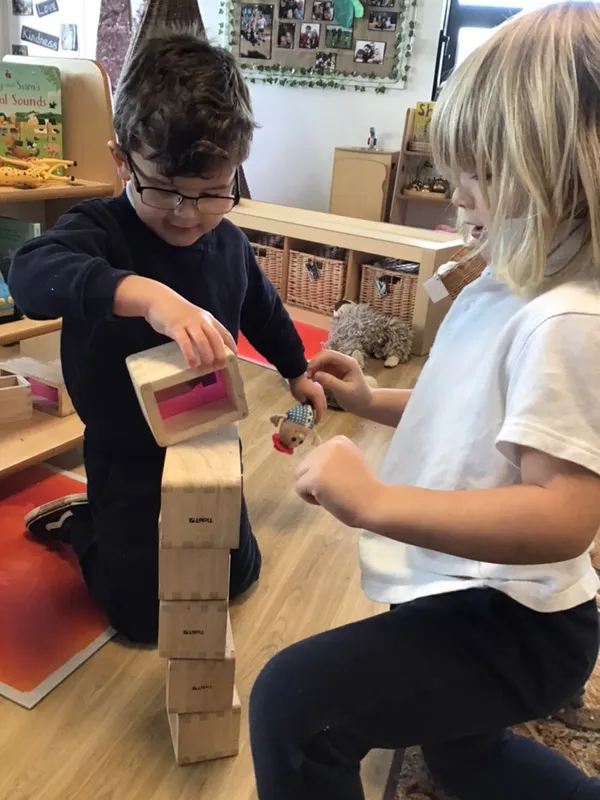
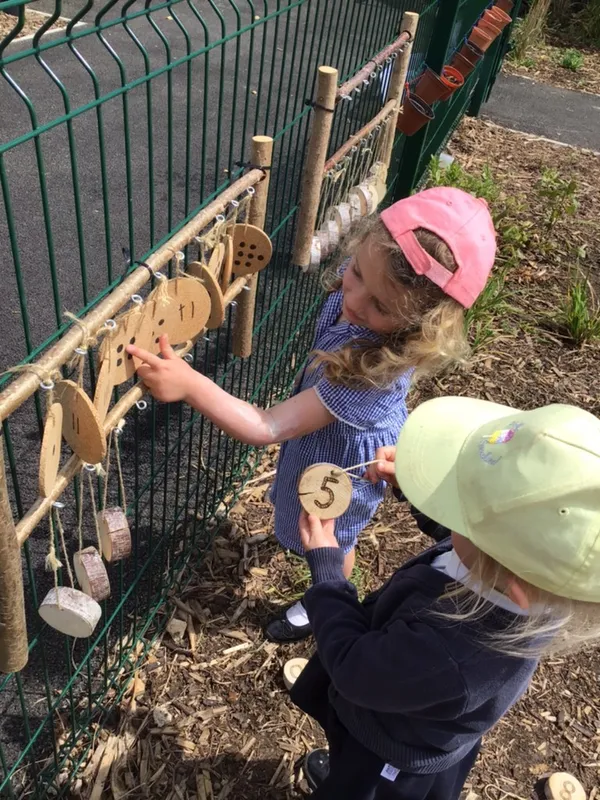
In EYFS, maths is taught through a number based approach. In Nursery, children sing number songs and engage in short, focussed sessions with adults. In Reception, children explore a wide range of concepts such as 1 more/1 less, addition, subtraction, shape, money, time and measure.
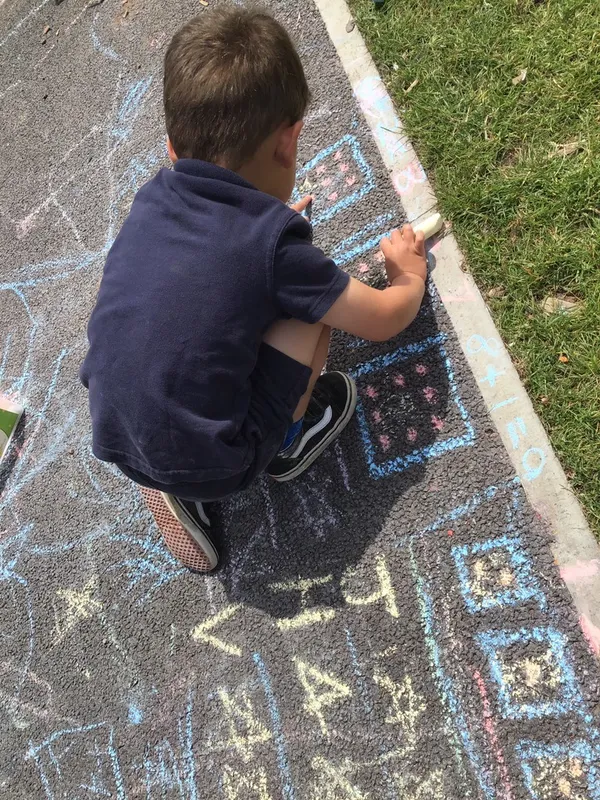
Adults use resources that deepen children's knowledge and there are opportunities for reasoning and problem solving through adult questioning both in taught sessions and in play. Throughout EYFS, there are regular and frequent opportunities for exploring with numbers as well as shape space and measure in the areas of provision, where adults regularly encourage and model mathematical concepts.
Throughout school we use a Mastery approach to teaching Maths
Teaching for Mastery Principles:
- Teaching is underpinned by a belief in the importance of mathematics and that the vast majority of children can succeed in learning mathematics in line with national expectations for the end of each key stage.
- The whole class is taught mathematics together, with no differentiation by acceleration to new content. The learning needs of individual pupils are addressed through careful small step scaffolding, skillful questioning and appropriate intervention is given in order to provide the necessary support and challenge.
- Factual knowledge (e.g. number bonds and timetables), procedural knowledge (e.g. formal written methods) and conceptual knowledge (e.g. place value) are taught in a fully integrated way and are all seen as important elements in the learning of mathematics.
- The reasoning behind mathematical processes is emphasised. Teacher/pupil interaction explores in detail how answers were obtained, why the method/strategy worked and what might be the most efficient method/strategy.
- Precise mathematical language in stem sentences is used by the teacher so mathematical ideas are conveyed with clarity and precision.
- Conceptual variation and procedural variation are used. These provide intelligent practice that embeds deep learning.
- Sufficient time is spent on key concepts to ensure learning is well developed and deeply embedded before moving on.
Fluency
Early Bird Maths is used across KS1 and 2. This focuses purely on calculations and arithmetic strategies. Children are exposed to this regularly throughout the week. Misconceptions are addressed during these sessions, to ensure the children are becoming fluent and confident with a range of calculations.
Arithmetic Clinic
Every Friday session is an 'Arithmetic Clinic' session. The focus of these sessions is to provide the opportunity for children to access a wider variety of maths content and is not directly linked to the learning in the CPR model. The focus is about using known facts and instant recall in KS1 into efficiently using calculation methods for a wide range of arithmetic skills into KS2.
From Year 2, teachers work on a 2 week cycle.
In week 1 provide children published arithmetic tests, which children work through, identifying areas they feel less certain on. Children then check their work with their partners before sharing the areas for development with the teacher. These areas then become the focus for upcoming Early Bird work as well as the focus for week 2 of Arithmetic Clinic cycle.
In week 2, the teacher models how to answer the questions which were causing uncertainties, then provides opportunities for children to safely practise with partners and allowing the teacher to intervene if required.
The cycle then begins again, with new areas identified
Mastering for Number
In addition to our daily maths lessons, we have fluency sessions. In EYFS and KS1, we are following the Mastering Number programme which aims to equip KS1 teachers with the skills and knowledge to ensure that all children leave KS1 with strong, deep and flexible understanding of the number system.
Reception Mastering for Number OverviewYear 1 Mastering for Number Overview Year 2 Mastering for Number Overview
Claire Christie
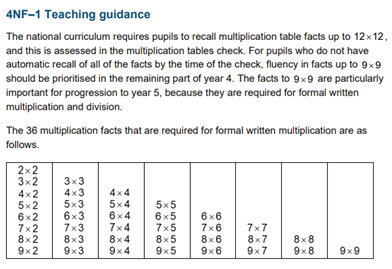
In KS2, we have a daily times tables focus using the Claire Christie approach to learning times tables. There are 36 key facts to learn as shown in ‘Mathematics guidance: key stages 1 and 2 Non-statutory guidance for the national curriculum in England’
Our approach:
- Systematic, whole class approach to learning the times tables.
- Aims to break down the learning of the times tables into manageable chunks learning a times table at a time
- Importance of the commutative law and the relationship with division facts.
- Rote learning in which children learn the number facts AND a sound pattern
- Little and often - a two minute times table test with 40 questions in each test
We also use Times Tables Rockstars to support the children with learning their tables facts to automaticity.
How do we know we are achieving our aims?:
- Children can talk confidently about Maths and the concepts surrounding the CPR model
- Children have a genuine love for Maths and challenge one another in a safe environment
- Children have excellent arithmetic strategies and determine the most efficient strategies to suit them
- Children reason and problem solve with confidence
- Children are passionate about maths
- Pupils can access age related mathematical objectives (supported for some by KUNCU strategies) and all children have opportunity to demonstrate to a greater depth of understanding.
- End of key stage data is in line with or above national
Maths Long Term Progression Planning